Garage door repair service Brooklyn homeowners call when the car is trapped inside starts with a symptom, not a sales pitch: the door went up and reversed, a bang came from overhead and now it's too heavy to lift, or the gate is stuck crooked halfway. Describe what the door did on the phone at (929) 286-9970, or text a photo of the spring shaft and the track, and the likely cause is usually clear before a truck rolls.
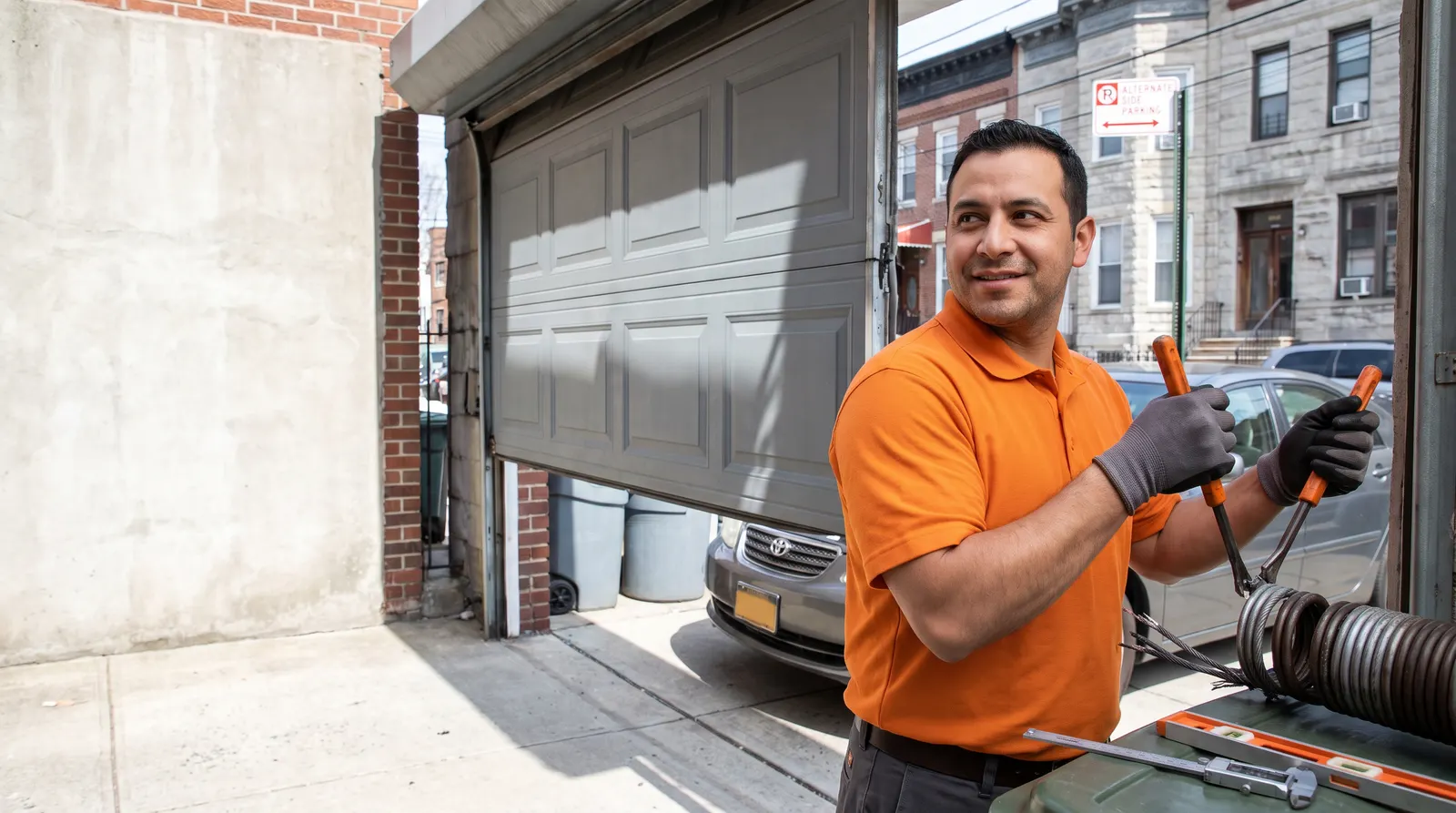
Every service reflects the same meticulous attention to detail — whether it's a single job or a larger garage door repair project across Brooklyn.
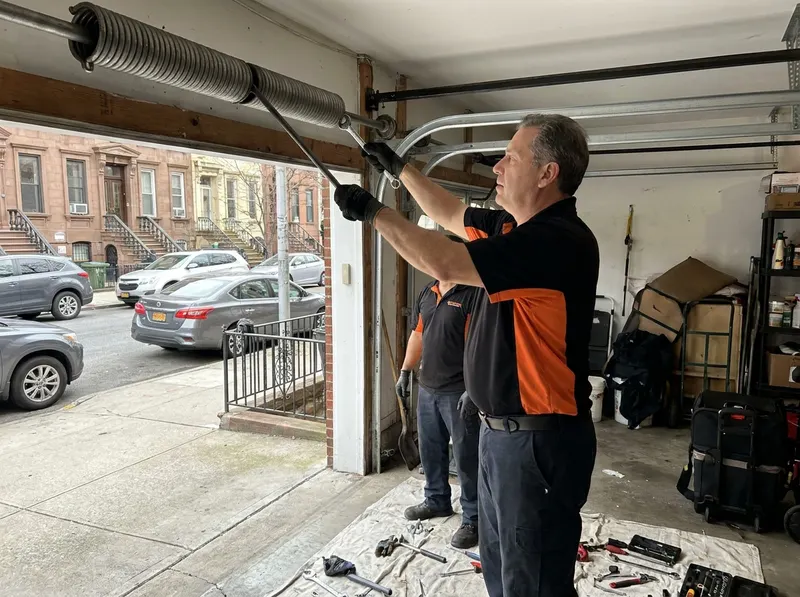
A snapped torsion spring is the single most common Brooklyn garage door failure, and it announces itself with a bang like a gunshot from the garage. After the break, the door weighs its full 150–250 lbs with nothing counterbalancing it, so it will not lift by hand and the opener will strain or do nothing. Springs are replaced in matched pairs where two are fitted, wound to the door's weight, and the balance is tested by hand at the halfway point before the opener goes back on.
Get a quote →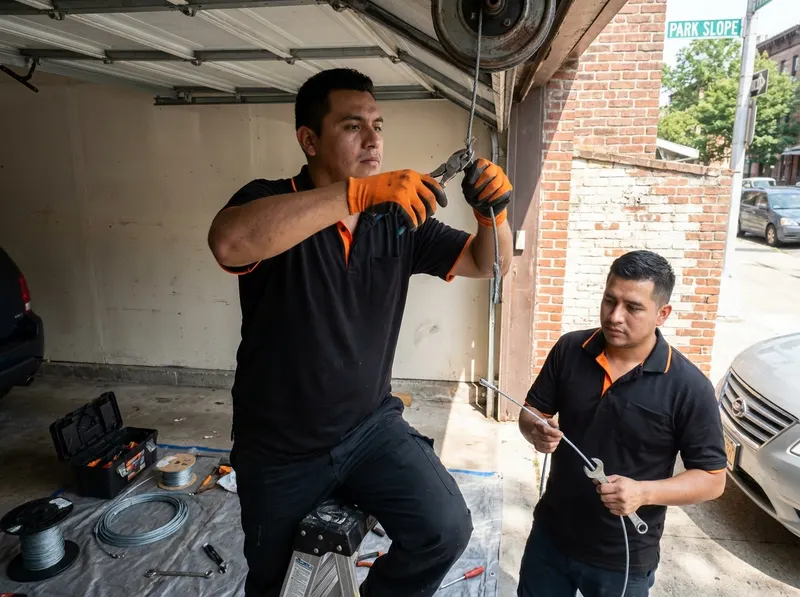
Lift cables fray, unwind off the drum, or snap on one side and leave the door hanging crooked in the opening. Salt air moving inland from the Coney Island Boardwalk and Marine Park accelerates cable and drum corrosion on doors in South Brooklyn, so the strands go before the spring does. Cable repair includes re-seating the drums, squaring the door in the track, and checking the bottom brackets that hold the cable under full spring tension.
Get a quote →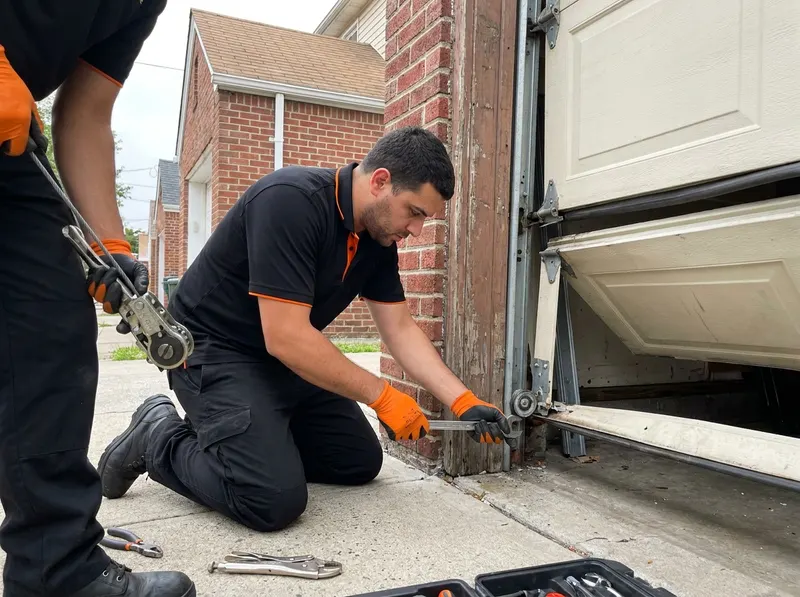
A door stuck crooked, jammed halfway, or with rollers popped clear of the vertical track is an off-track repair. The usual causes in Brooklyn are a bumper hit in a tight shared driveway, a loose track bracket, or a broken cable letting one side drop. Repair means lowering the door safely, resetting the rollers, straightening or replacing the bent track section, and re-tightening the hardware so the door tracks square through its full travel.
Get a quote →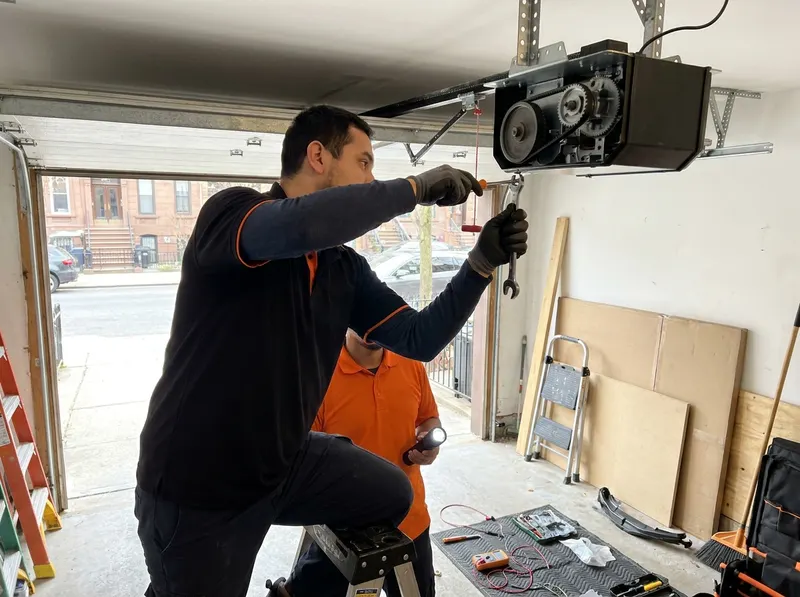
Opener repair covers stripped drive gears, dead logic boards, failed capacitors, broken trolleys, bad limit switches and worn chain or belt drives. A motor that hums without moving the door, or a door that stops short of the floor, is usually an opener fault rather than a spring fault. Openers are tested against the door's mechanical balance first, because a healthy motor pulling a badly balanced door will burn out again within months.
Get a quote →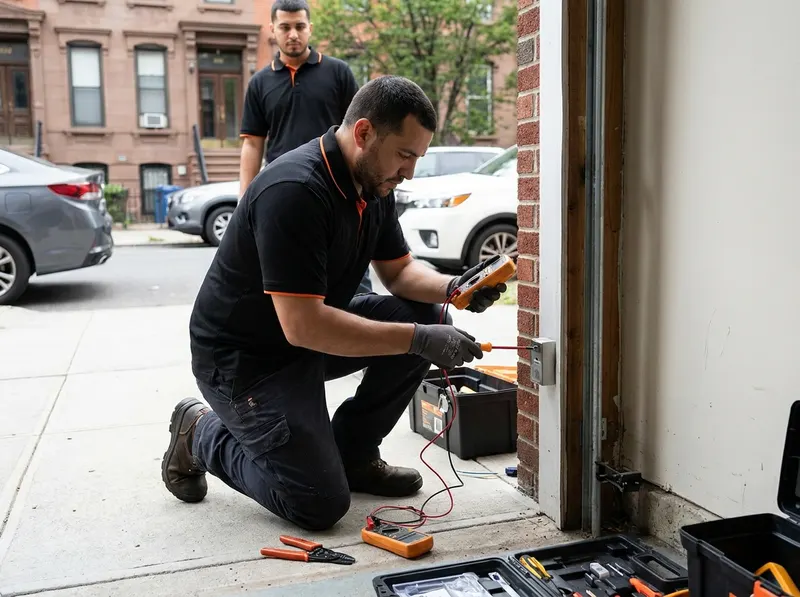
A door that reverses back up before it lands is normally a photo-eye problem: knocked out of alignment, sun-blinded, moisture in the lens, or a pinched wire along the jamb. Sensor repair realigns the eyes, replaces damaged brackets or wiring, and confirms the auto-reverse works against a solid object on the floor. Working auto-reverse matters most in garages where kids, pets or a shared driveway put people under a moving door.
Get a quote →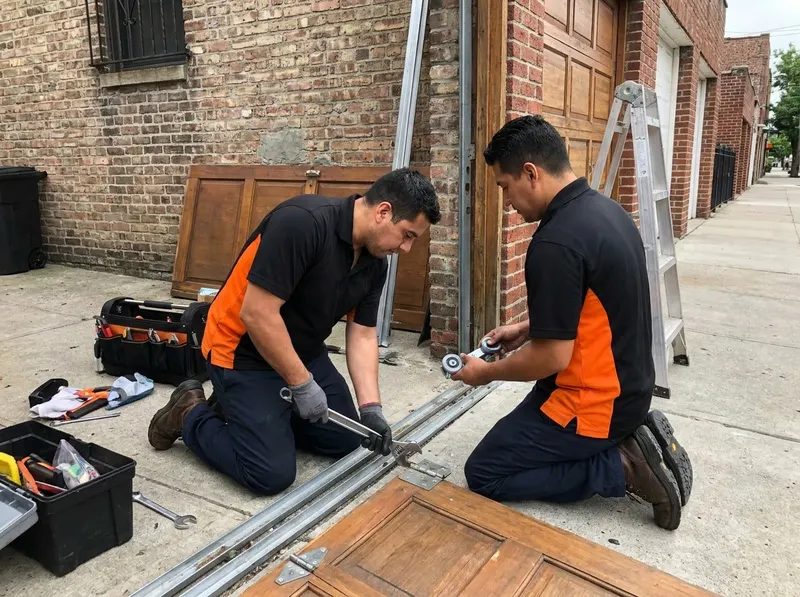
Grinding, screeching and shuddering usually trace back to seized rollers or cracked hinges, not the opener. Worn nylon or steel rollers let the door rack sideways and chew the track, and a cracked center hinge will eventually creases the panel above it. Roller and hinge replacement is the cheapest way to quiet a loud door in an attached Bay Ridge or Dyker Heights garage where the bedroom sits directly above.
Get a quote →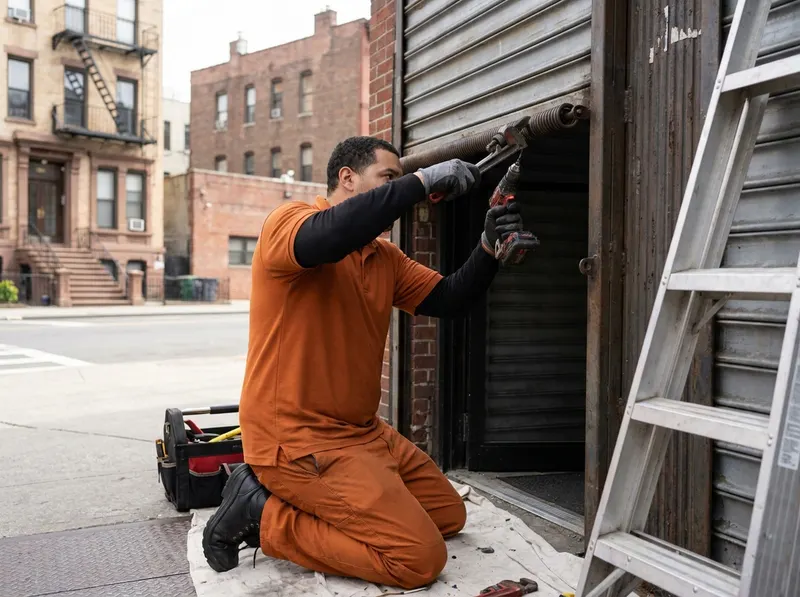
Steel roll-up gates on Brooklyn storefronts and warehouses are repaired on their own hardware: barrel springs, drum bearings, guide rails, bent or split curtain slats, bottom bars and floor locks. A gate stuck halfway blocks a whole day of business, and a gate that won't come down leaves stock exposed on the street overnight. Manual and motorized gates along commercial strips in Sunset Park, Bushwick and Canarsie are both handled.
Get a quote →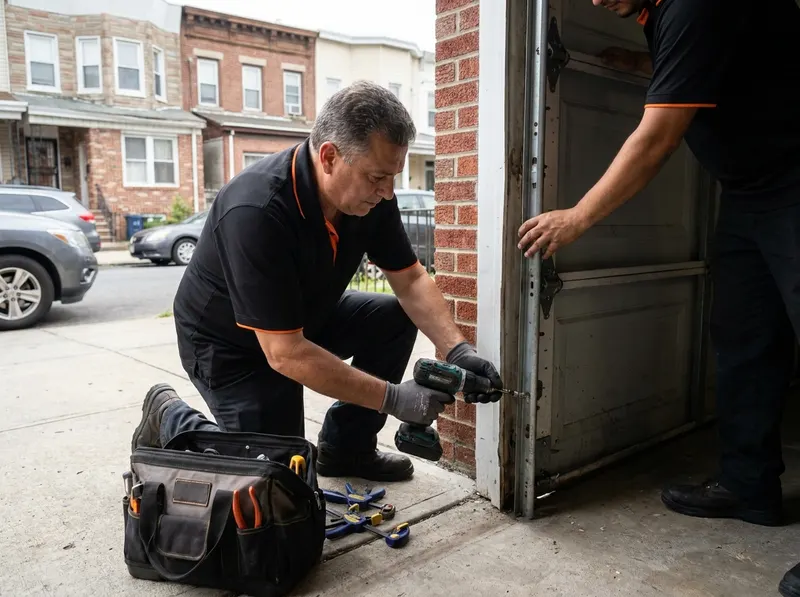
A single creased or rusted-through section can often be swapped rather than replacing the whole door, provided the model and rib profile can still be matched. Panel repair also covers re-hanging bowed sections, replacing struts on wide doors, and reinforcing the top section where the opener bracket has pulled loose. Where a match no longer exists, the honest recommendation is a full door — said upfront, not after the deposit.
Get a quote →A garage door repair service in Brooklyn is a mobile mechanical trade that diagnoses and repairs the springs, cables, rollers, tracks, hinges, openers and roll-up gate assemblies that make a residential or commercial door lift, hold and close safely across Kings County.
You get a firm, itemized quote for your garage door repair before any work begins — no surprises, no pressure.
Careful prep, tidy work, and a full cleanup when we are done. We treat your home and belongings like our own.
The same trusted, background-checked team from the first call to the final check.
The real decision on a Brooklyn garage door is repair versus replace, and the door itself tells you which. If the panels are straight, the frame is square and one part failed — a spring, a cable, a roller, a bracket — repair the part; a spring or cable job runs a few hundred dollars against a full door replacement in the thousands, and a 15-year-old steel sectional door with good panels has plenty of life left. If two or more panels are creased, the bottom rail is rusted through from years of salt air off Sheepshead Bay and Coney Island, or the top section is pulling away from the hinges, replacement is the honest answer, because new hardware bolted to failing steel fails again. The trade-off is money now versus money twice. If you want the cheapest path back to a working door today, replace only the broken component. If you want to stop repeat service calls on a door that has already been patched three times, replace the door and keep the opener if the motor and rail are sound. On openers, the same logic applies: a gear kit, logic board or limit switch repair fits a unit under roughly ten years old, while a chain-drive opener from the 1990s with no rolling code and no working safety reverse is worth replacing outright. Older brownstone and carriage-style swing-out doors in Park Slope, Bedford-Stuyvesant and Brooklyn Heights are usually worth repairing on hardware alone — hinges, pivot posts, latch gear — because matching the original wood and proportions costs far more than fixing what is there.
Every project gets a firm, written price after a free on-site visit. Ranges below for orientation.
Tell us about your garage door repair job and we'll send a clear, written quote — usually the same day. Or just call and talk to a real Brooklyn pro.
(929) 286-9970Free estimates for Brooklyn & the surrounding area.
 Canyon Garage Door's Repair Experts